How We Work
OEM/ODM made clear—step-by-step from idea to brand-ready pieces, built for speed, quality, and consistency.
Jewelry Manufacturing Processes
CAD 3D Design
From sketch/reference to 3D model; spec review & structural validation.
Learn more →
Rapid Prototyping
3D printing / CNC to verify geometry & comfort; faster sampling.
Learn more →
Lost-Wax Casting
Repeatable quality for volume; silver, brass, bronze, gold, etc.
Learn more →
Grinding & Filing
Sprue removal, repair, reshaping; foundation for finishing.
Learn more →
Multi-Stage Polishing
Stepwise polish & cleaning that defines final gloss and plating.
Learn more →
Stone Setting
Microscope setting—prong, bezel, pavé—by experienced artisans.
Learn more →
Plating / E-Coating
Selectable color & thickness (up to μm levels), optional clear topcoat.
Learn more →
Quality Control
End-to-end checks + final inspection before shipment.
Learn more →CAD 3D Design
CAD (Computer-Aided Design) models that maximize quality, minimize costs, and realize your vision.
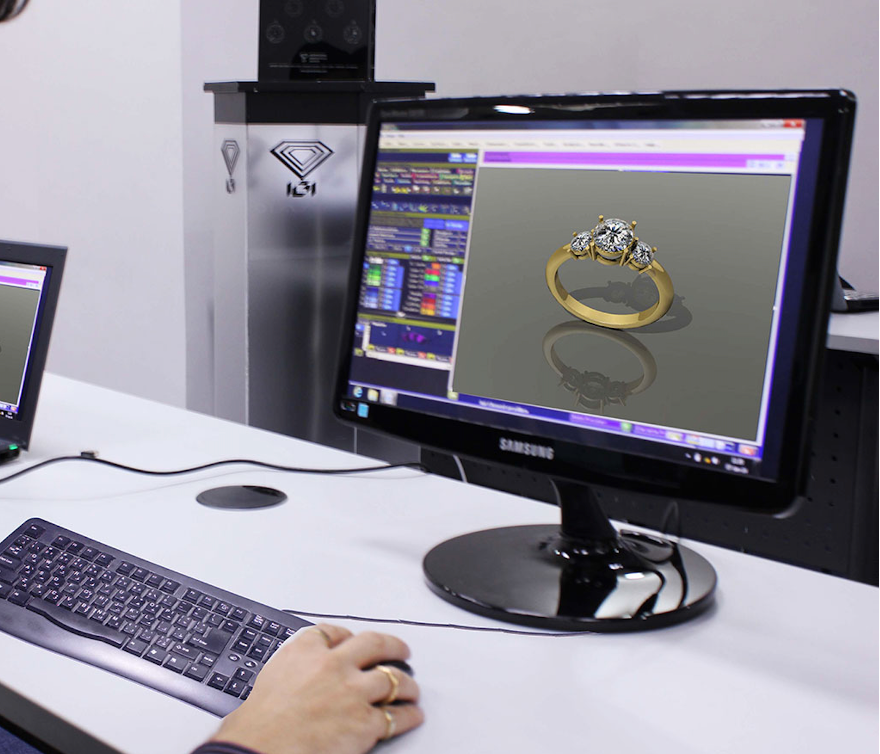
Our jewellery design team will take take designs in any forms, from rough hand sketches, Instagram photos, technical drawings, all the way to imitating the actual sample piece. The 3D designer uses a specialized computer program to build a 3D model of the jewelry, which requires considerable skill and creative methods. CADs will send to our clients for review after finished, and then our craftsmen will make physical samples.
Thus, please do send over what you have, we can quote and create samples for you.
Rapid Prototyping (3D Print / CNC)
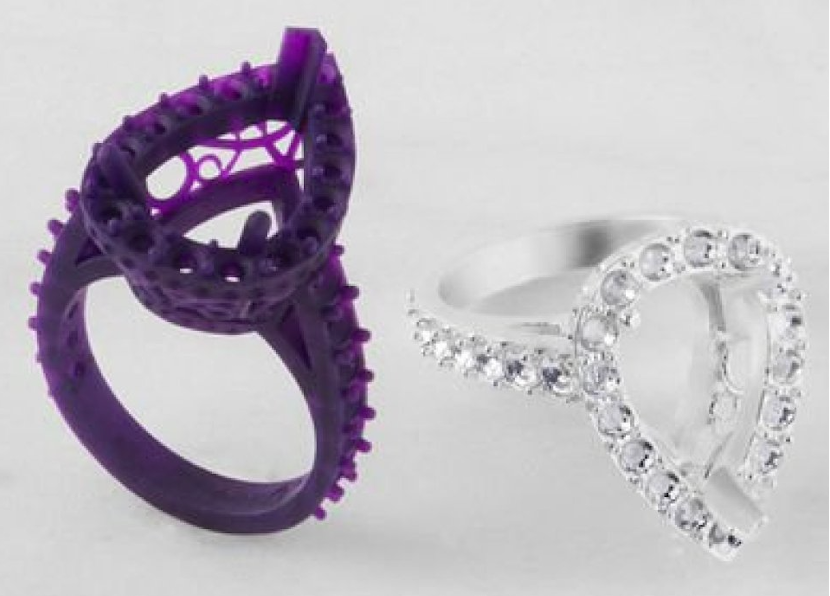
Traditional jewelry design practices, such as hand drawing and drafting, are still commonly used in jewelry production. However, we use rapid prototyping processes – 3D printing and CNC machining in making jewelry.
By using a CAD model of a ring, bracelet, earrings, or other forms of jewelry, a jewelry prototype can easily be reproduced by jewelry prototype manufacturers using a computer-controlled production process.
This is easier than traditional jewelry creation methods, which can reduces Production Time and the Chances of Errors. Also it Improves Customization and has less cost. Prototyping jewelry services can ensure quality production of jewelry which is the essential part.
Lost-Wax Casting
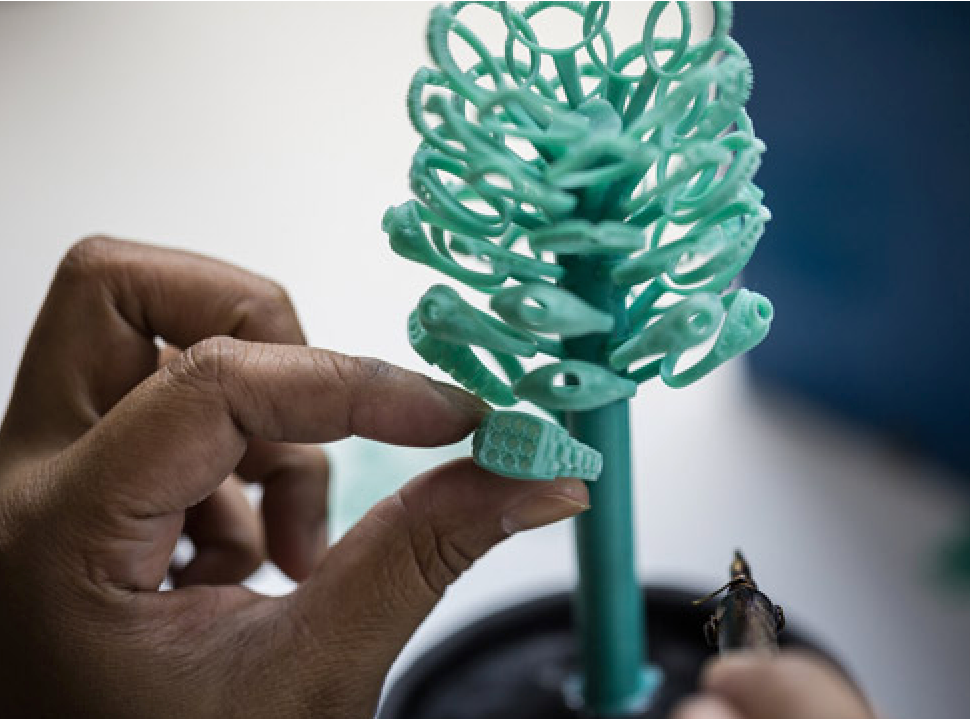
Jewelry casting is the process by which a wax pattern is made into a jewelry mold and then filled with molten metal or silver to create a custom piece of jewelry. It is also called lost wax casting because the wax is always “lost” during the process of making jewelry.
One of the main advantages of lost wax casting is that you can replicate the same model as many times as you’d like. The most common metals used for this process are silver, gold, brass, and bronze – so there are many opportunities for your jewelry-making projects!
Casting is a very efficient method for producing large volumes of jewelry, since it is possible to use multiple molds at once to create a finished piece. It is less expensive when compared to handmade jewelry, as it requires less time and labor.
Grinding & Filing
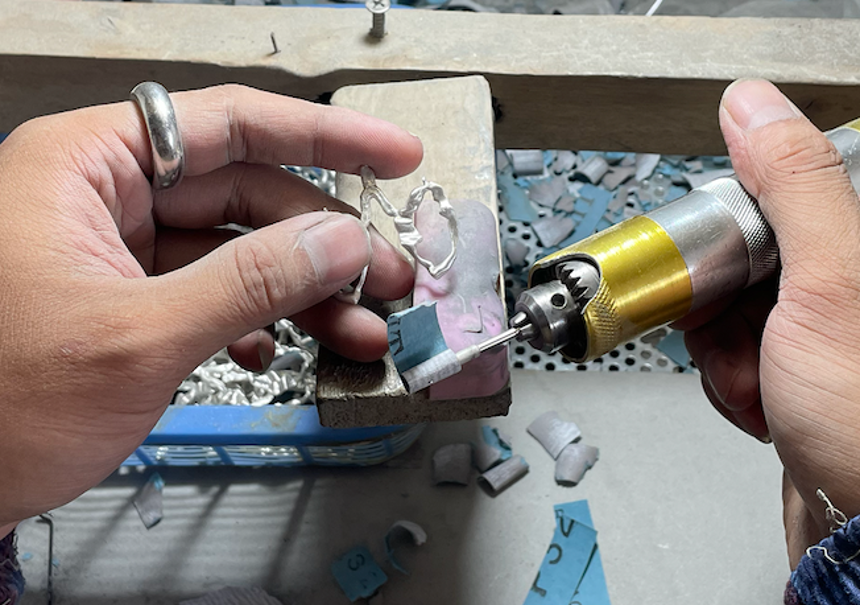
The grinding involves the use of polisher which is used to grind off the nub, the polisher utilizes the motorized grinding machine to smoothen the surface of gold piece of the jewellery.
And under Filing, the excess metal or solder is being removed from the piece.Filling is the process of removing any surplus metal from a piece of metal and smoothing off the surface. This step is required to ensure that each piece of jewelry is in the best possible condition, and to fully achieve the desired product shape.
After that, Dorji Jewelry will conduct secondary quality inspection on semi-finished products and select the best for production.
Multi-Stage Polishing
Polishing in multiple stages in order to ensure the perfect finish for every piece.
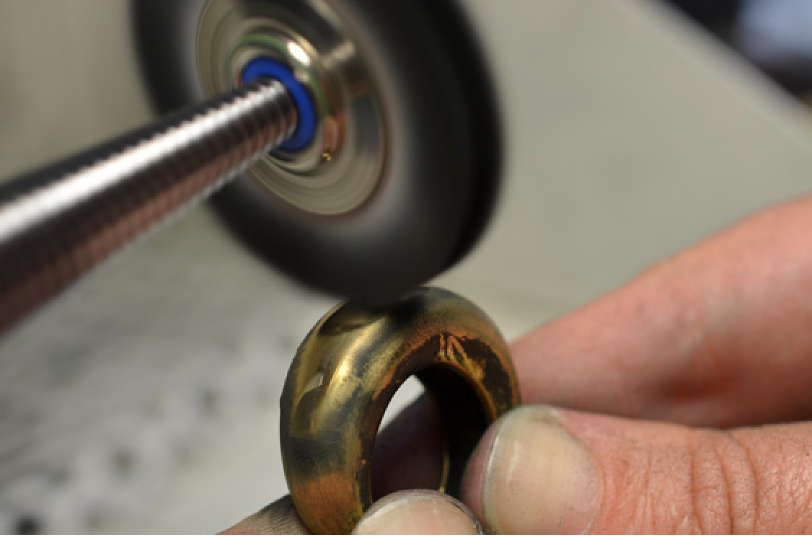
Polishing, like filling, entails the employment of many materials to ensure that the object is polished properly. The goal is to make the metal shine and be free of blemishes, giving it a high-end appearance. High-speed polishing equipment and cleaning baths are commonly used.
Because the better the polishing, the better the plating effect, Dorji jewelry will pay more effort to jewellery polishing. Even we will do polishing for finished product chains to make it more shiny.
Stone Setting
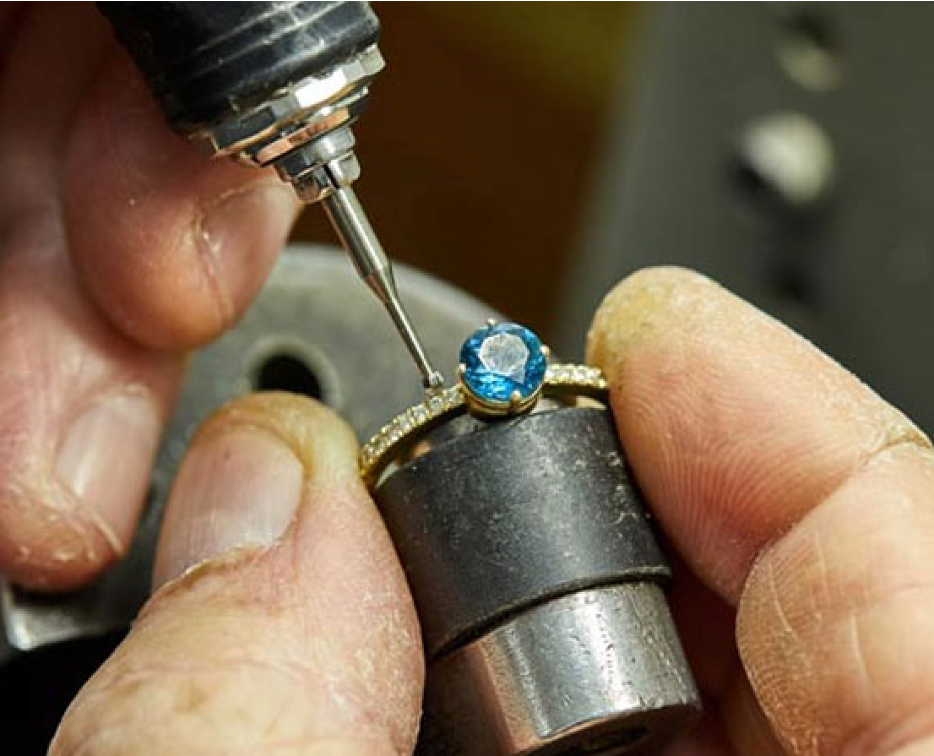
This is one of the largest and most important stages in the production process. Experienced craftsmen use microscopes to carefully set or attach zircons, diamonds and other inlays in special places and fix them. The work of Dorji jewelry at this stage is fixed by hand by professional craftsmen with many years of work experience.
Plating / E-Coating
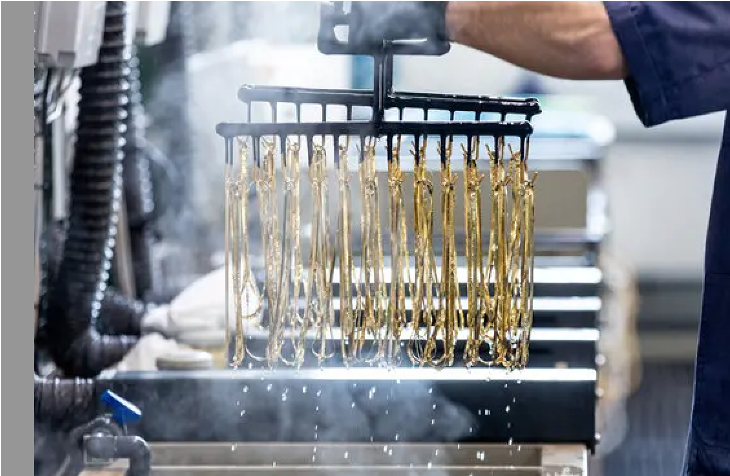
Plating is a method of coating, There are many reasons for plating such as: to change the color, to add value with a layer of a more expensive metal, or prevent tarnish. According to clients needs, precious metals of different colors and thicknesses can be plated.
Depending on your price point, we can plate to the highest standard of micron (e.g., Au 0.3–3.0 μm), And can contain a clear e-coating to protect the plating.
- XRF spot checks on thickness when applicable
- Skin-safe finishing and nickel-release compliance on request
Quality Control (QC)
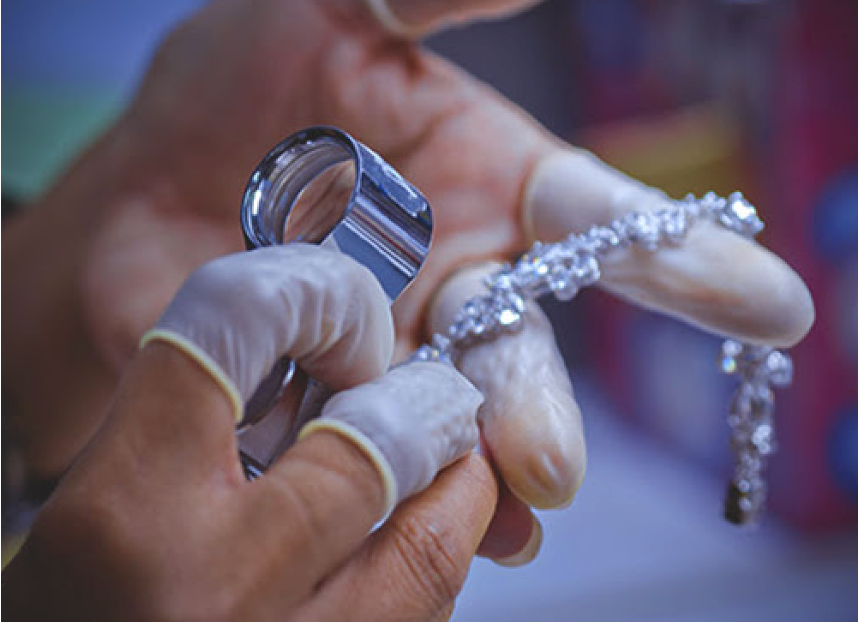
End-to-end checks: incoming materials, in-process dimensions, prong tension, plating thickness, 100% appearance inspection, pull/torque tests, and packing to spec.
- Defect tracking & corrective actions
- Final lot verification before shipment
OEM Process
From design brief to shipment — transparent steps, engineered quality.

-
Client provides designs
Share reference images or sketches and a short brief: base metal (925 silver / eco brass / 316L stainless), stone type and sizes, ring size / chain length, plating color & target thickness, finish (matte/polished), quantity tiers, target price, and timeline. We can sign an NDA upon request. Preferred files: JPG/PDF for visuals; AI/PSD for artwork; 3DM/STEP/STL if you already have 3D.
-
Project evaluation
Our engineers review feasibility (structure, wall thickness, stone setting method: prong/bezel/pavé, post & clasp specs). We suggest optimal processes (casting/CNC), recommend base metal and plating specs (0.3–3 µm), estimate MOQ, lead time, and potential risks (e.g., fragile prongs, large flat areas prone to wear).
-
Quotation
Itemized quote including mold/3D cost if any, unit price by quantity breaks, plating option upcharges, packaging & labelling, sampling fee and possible credit against bulk, and shipping estimate. Quote validity is typically 15–30 days.
-
Sampling deposit
Confirm the sample PO and pay the sampling deposit to secure materials and a production slot. The fee covers CAD/3D modeling, casting/printing, finishing, plating, and QC for the prototype.
-
CAD drawing confirmation
We provide CAD screenshots/renders (and 3D views if needed) showing dimensions, tolerances, logo/mark, prong design, inner comfort fit, and ring sizes. Minor adjustments are made before we proceed to prototyping.
-
Samples production
Standard sequence: 3D print or mold → casting → sprue removal → hand filing & pre-polish → stone setting → plating (e-coating optional) → final polish → initial QC. Typical turn time 7–15 business days depending on complexity and queue.
-
Sample delivery & approval
We share photos/video first, then ship via DHL/UPS/FedEx. You verify fit, color tone, and comfort. If needed, we record revisions and finalize the “golden sample” as the master reference.
-
Bulk order & payment
Confirm the PO (SKU, sizes/lengths, plating spec, packaging). For OEM, standard terms are 50% deposit / 50% balance before shipment. We book production capacity and purchase stones, chains, findings and packaging.
-
Mass production & QC
Incoming QC on materials → in-process checks (dimensions, prong tension, stone security) → plating thickness spot checks (XRF when applicable) → 100% appearance inspection → pull/torque tests for clasps & chains → packing to spec (bags/cards/boxes, barcodes and labels).
-
Balance & shipping
We send final photos, weights and packing list. After balance payment we dispatch by your preferred method: express courier, air cargo or sea freight. Documents include commercial invoice, packing list and HS codes; insurance available on request. We share tracking and support reorders.
ODM & Wholesale Process
Pick from our catalogue, customize light details, and ship faster.

-
Select styles
Tell us your market, budget and preferences (plating color, stones, lengths). Choose SKUs from our catalogue. Light customization such as color mix, stone choice, carding/barcodes, or length tweaks is available.
-
Quotation
We quote per SKU with MOQ tiers, current lead time and any plating upgrades. For items in stock, we confirm available quantities; for make-to-order, we provide an accurate schedule.
-
Samples (optional)
For color or fit confirmation, we can ship samples in 5–10 business days. Depending on agreement, the sample fee can be credited to your first bulk order.
-
Order & payment
Finalize the list (SKUs, sizes, colorways, labelling). Wholesale in-stock orders are usually paid in full; made-to-order ODM orders can follow OEM-like terms. PI and payment instructions are provided.
-
Preparing goods
We pick and QC, then pack and label to your retailer specs (bags/cards/boxes, barcodes). We can shoot simple product photos for listings on request.
-
Shipping
Express courier for speed, or consolidate for freight. We share invoice, packing list and tracking; post-shipment support covers claims assistance and replenishment planning.
Payment & Shipping
Payment
Methods: Bank Transfer (T/T), PayPal, MoneyGram, Western Union. Currency: USD by default (EUR/CNY on request). Payer covers bank/PayPal fees.
Terms: OEM usually 50% deposit / 50% balance before shipment; wholesale in-stock orders often paid in full. Proforma invoice provided with bank details; invoices and receipts issued upon payment.
Notes: Prices exclude local taxes/duties at destination. If you need VAT-compliant papers or special statements, tell us before shipment. Sample fees may be credited against bulk per prior agreement.




Shipping
Options: Express couriers (DHL/UPS/FedEx/TNT/DPEX/Aramex), air cargo or sea freight. Terms available: EXW, FOB (e.g., Shenzhen), CIF; DDP to selected countries subject to confirmation.
Transit time (reference): Air cargo ~7–12 days; sea 20–35 days depending on lane. Peak seasons may vary—book early for launches.
Documents: Commercial invoice, packing list, HS codes; MSDS/ingredients statements for plating on request. Insurance and photo proof-of-packing available.
Tracking & claims: Tracking shared upon dispatch. For damage/shortage, notify us within 7 days of delivery with photos and carton labels so we can assist claims or rework.